


Meet the Directors
At the CICLOPE Asia Pacific Awards in Sydney earlier this year, Patrick Fileti, Atsushi Makino, and David Robinson-Smith were named Director(s) of the Year 2026. They shared their unique lenses on what it takes to craft outstanding animation, short films, and branded content that transcends geographic borders and unites audiences.
Congratulations on your collective successes at this year’s CICLOPE Asia Pacific!
Patrick, you bring a multi-disciplinary approach to directing; blending genres and with a background in editing too. How does this help you create relevant and impactful brand storytelling in the current era?
Patrick Fileti: Growing up between countries, Italy, Spain, London, now Australia, you spend a lot of time observing before you participate. You notice things. Small behavioural details, emotional textures, the gap between what people say and what they actually mean. That instinct eventually pulled me toward documentary and it’s still the lens I bring to everything.
But editing probably shaped me more than anything else. It teaches you very quickly what audiences actually connect with, because you’re sitting there watching the same footage hundreds of times, and you feel exactly where attention drops and where it holds. The answer is almost never the crane shot. It’s almost always the thing that felt slightly accidental.
That matters now more than ever because audiences are sophisticated in a way they’ve never been before. A brand film sits in the same feed as a documentary, a feature, something shot on a phone. People can feel the difference between something constructed and something true almost immediately. You can’t fake your way through it anymore.
So whether I’m making a commercial, a documentary or a narrative film I’m essentially trying to solve the same problem, find the emotional truth first and build everything else around that. If someone watches something and feels it before they clock that it’s advertising, that’s the job done.
GO Mongolia was a truly international production. Can you share some insights on the process behind making the film?
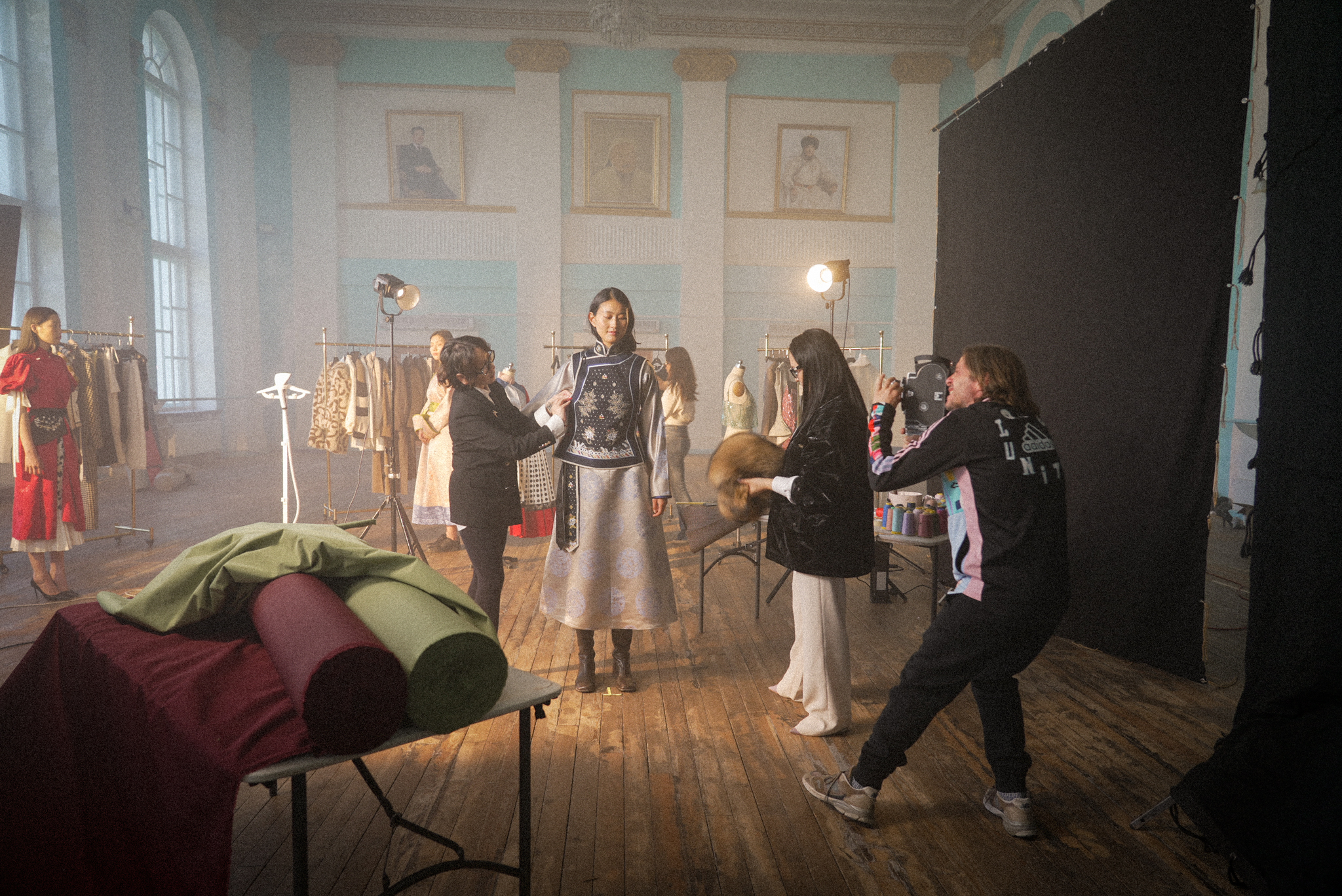
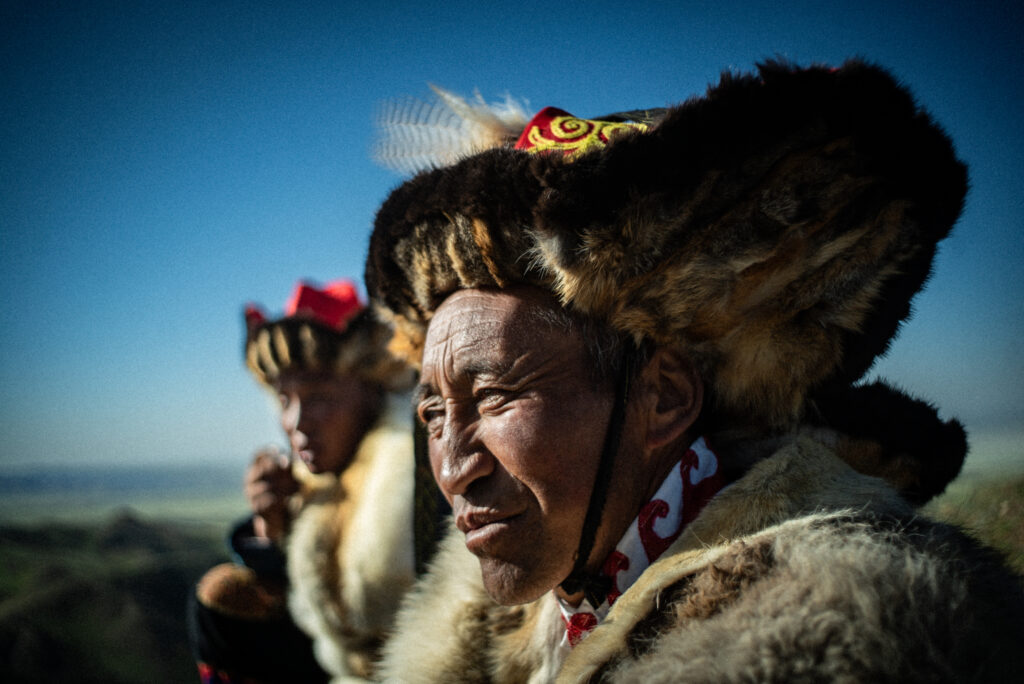
PF: I was directing, operating B-camera, recording sound and apparently also working in the smoke department; lighting piles of dried cow dung to create atmosphere in a dense forest while Mongolian warriors charged past on horseback firing arrows. At some point you stop questioning how you got there and just try not to get shot. We caught trains between Mongolia, Paris, London and Tokyo and woke at 3am more times than I can remember. Nobody was there for the money. Everyone was there because they believed in the film.
Mongolia wanted their first global campaign to feel like something other than a tourism ad. So we made it a film about identity and belonging instead. What made it genuinely special was the decision to crew almost entirely locally in Mongolia. That’s unusual for an international production, but it meant we weren’t arriving and pointing cameras at things. We were seeing the country through their eyes. Some of my favourite moments weren’t on set at all, they were sitting with families on the steppe, sharing meals, hearing stories. That feeling found its way into the film even if you can’t point to exactly where.
Atsushi, can you tell us about the process behind making the stop-motion film Craftsman.Ships?
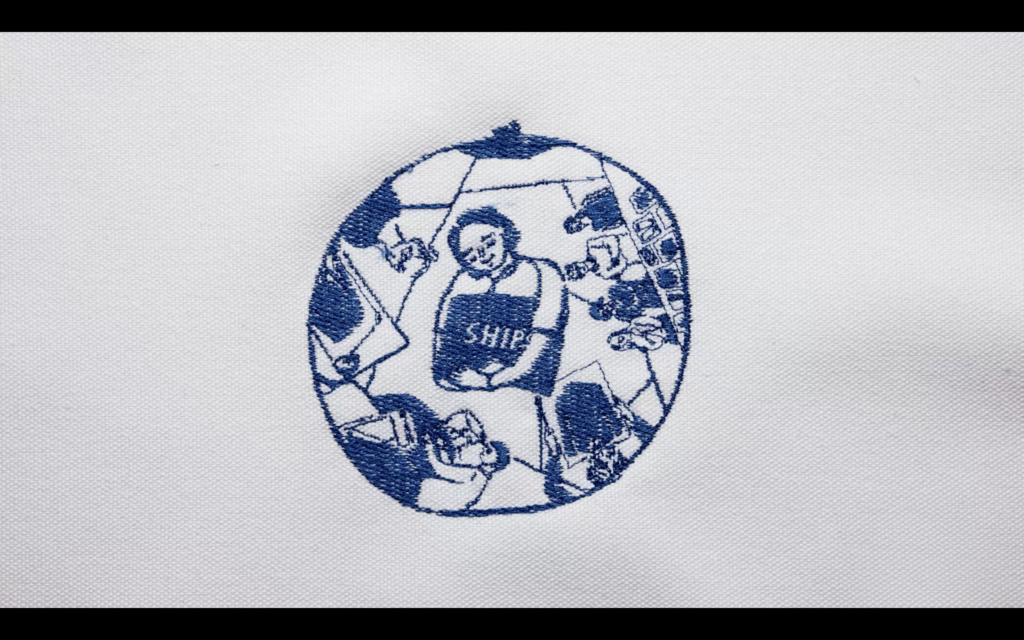
Atsushi Makino: The idea of creating SHIPS‘ 50th anniversary film entirely through embroidery came from the advertising agency Hakuhodo Gravity. Because embroidered animation is extremely time-consuming and expensive to produce, my highest priority was to avoid any revisions after the embroidery had been completed. I had faced a similar challenge on a previous commercial that used oil painting animation. There I first created a conventional animation and had the agency and client approve the timing, editing, and overall flow, before each frame was painstakingly recreated as an oil painting.
For Craftsman.Ships, I adopted the same approach. I first produced a hand-drawn animation and had every movement and sequence approved before moving on to the embroidery stage. At the same time, I exported the animation as a sequence of still images and began searching for an embroidery artist who could faithfully reproduce each frame in thread. Once every embroidered frame was completed, each piece was photographed individually and assembled in the edit to create the finished film.
What decisions were made to prioritise craft in this work, and what challenges or opportunities did these present for all involved?
AM: There are digital techniques that can simulate the look of embroidery. For example, you can use a photograph of embroidered fabric as a texture and mask it into the shape of an illustration. However, that approach reduces embroidery to nothing more than a surface texture. The edges of the artwork end up looking unnaturally cut off, as if the threads have been sliced. I felt that this would undermine the very concept of creating the film through embroidery, so I decided that every frame should be embroidered by hand.
Having studied animation, I knew that highly detailed handcrafted animation doesn’t necessarily need to move at a high frame rate. Because each frame contains so much visual information, I felt that 6–8 frames per second would be enough to create convincing movement. Instead, I placed extra emphasis on the sound design, so that the embroidery would feel more tactile and alive than the visuals alone could achieve.
The project’s budget and schedule also imposed some creative limitations. Each embroidered frame had to remain relatively small, making subtle character acting difficult to express. At the same time, cutting too frequently would have made the film feel fragmented. To solve this, I designed the sequence as a single continuous shot leading up to the final copy. By moving the camera dynamically through the scene, I was able to compensate for the limited animation while making the small embroidered world feel much larger and more immersive.
When photographing the finished embroidery, I intentionally left extra space around each piece because I originally planned to crop in digitally during editing. However, when reviewing the footage, I noticed that the fabric had naturally warped and wrinkled as a result of the stitching. Those imperfections made it immediately clear that the work had been created with real embroidery rather than digitally simulated. I decided to preserve both the original framing and the wrinkles in the fabric, even though my initial plan had been to remove them.
Because we couldn’t show the actual embroidery until it was completed, I imagine the agency had the difficult task of asking the client to trust something they couldn’t yet see. Nevertheless, everyone involved believed in the process. That trust allowed us to create something with a physical presence that simply couldn’t have been achieved through AI or digital techniques alone.
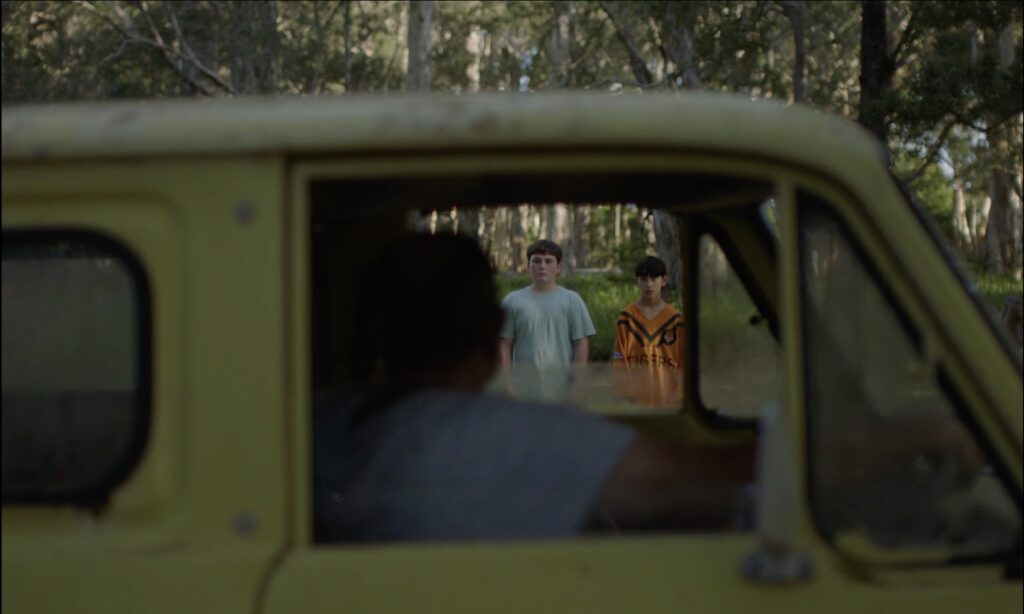
David, why was the dark fairy tale, The Shirt Off Your Back, an important story for you to tell, and why now?
David Robinson-Smith: I wanted to capture one of those small childhood moments that stays with you forever. The specific details don’t matter; what matters is the instinctual impact it leaves on the children. Since finishing the short, I’ve realised how common this experience is.
Audiences constantly share their own versions of it with me. I feel that it’s a story that resonates deeply if you’ve ever had your own childhood brush with the darkness, and remains intriguingly out of reach if you haven’t.
The short film was awarded a Grand Prix at this year’s CICLOPE Asia Pacific Awards. Why does bold craft continue to resonate with audiences, and what impact does it have on the wider media landscape?
DRS: In the current media landscape, an individual artistic perspective has become the ultimate differentiator. As algorithmic content and formulaic media become more pervasive, audiences are actively pushing back, seeking out deeply human, singular stories told in unconventional ways.
There has never been a more urgent or exciting time to lean into authentic, uncompromising self-expression. High-level craft is no longer just a luxury; it is the antidote to the sea of mediocrity surrounding us. This shift is drawing a line in the sand, proving that safe, middle-of-the-road content simply won’t cut it anymore.