


Behind the Brand:
Squarespace
As Chief Brand and Creative Officer of Squarespace’s in-house agency, David Lee is one of the leading minds behind the company’s award-winning work. To kick off a new year, we asked David about changing industry dynamics, collaborating with internationally acclaimed directors such as Spike Jonze, Edgar Wright, Steve Rogers and Aoife McArdle, and how the brand’s firmly established itself as one that values craft.
Squarespace is a prime example of a successful in-house agency. Why did it make sense for you as a brand to have in-house creative?
As someone who chose to build an in-house agency nearly twelve years ago—long before it became fashionable—I’ve developed some pretty strong opinions on this topic.
Most companies start one for the wrong reason: cost. They believe an internal team will be cheaper than agencies. It won’t be.
Agencies will always exist for one reason—there’s someone else to point the finger at. Build an in-house agency and that shield vanishes. If the work is mediocre and the business suffers, you only have yourself to look at in the mirror. Most people don’t want that level of accountability.
Here’s what most don’t get. Building any agency is brutally hard. It lives and dies on talent. And talent follows the work. Your strongest recruiting tool is the creative you put out into the world. Creative people don’t join companies for safety—they join for the chance to make something that matters. You will never attract or retain great talent to make average work.
At Squarespace we did it because we’re makers—designers and engineers building a product that gives other people a canvas for their ideas. We’re a DIY platform by nature, so we built our own brand, voice, and creative expression the same way.
If you’re going to build an in-house agency, do it for the right reasons. Do it because you believe no one understands your brand better than the people inside it. Do it because you’re willing to take full responsibility for the work. And do it because that closeness—the proximity to the product, the data, the people and culture—creates the best conditions for great ideas and breakthrough work.
How adaptable is the in-house model to the changes the industry’s going through, and is it one we’ll be seeing more of?
Adaptability isn’t optional anymore—it’s the job. This industry is moving so fast that teams have to stay malleable, like wet clay—you don’t know what shape you’ll need to be in a month from now, let alone a year.
That’s where an in-house model has a real advantage. You can shift priorities instantly. People aren’t locked into a single lane—they move from a Super Bowl campaign to a product demo, to a social idea, to an upcoming live event without friction. There isn’t an ivory tower on the team; people step up no matter who they are or what the situation requires—myself included. That doesn’t just make the work better—it makes the team stronger.
And we can’t talk about change without acknowledging the elephant in the room: AI. We’ve been using AI tools across most of our workflows for a couple of years now. But they’re just that—tools. They’ll keep evolving, and new ones will keep appearing.
What they’ve really done is compress the middle of the creative process. They don’t replace ideas. They certainly don’t replace human taste or craft. But they allow you to test, visualize, and validate ideas at incredible speed. What used to take weeks can now happen in days.
So what does that mean for creatives? I don’t believe in staring into the rearview mirror and being nostalgic for how things used to be—that’s a dead end and a waste of energy. If you want to stay relevant in this industry, now and in the future, you have to lean into the turbulence. Get curious. Learn the tools. Use them to your advantage.
Because if you don’t, someone else will.
You’ve demonstrated time and again the potential of award-winning work to come out of these changing industry dynamics. How do you choose your production partners?
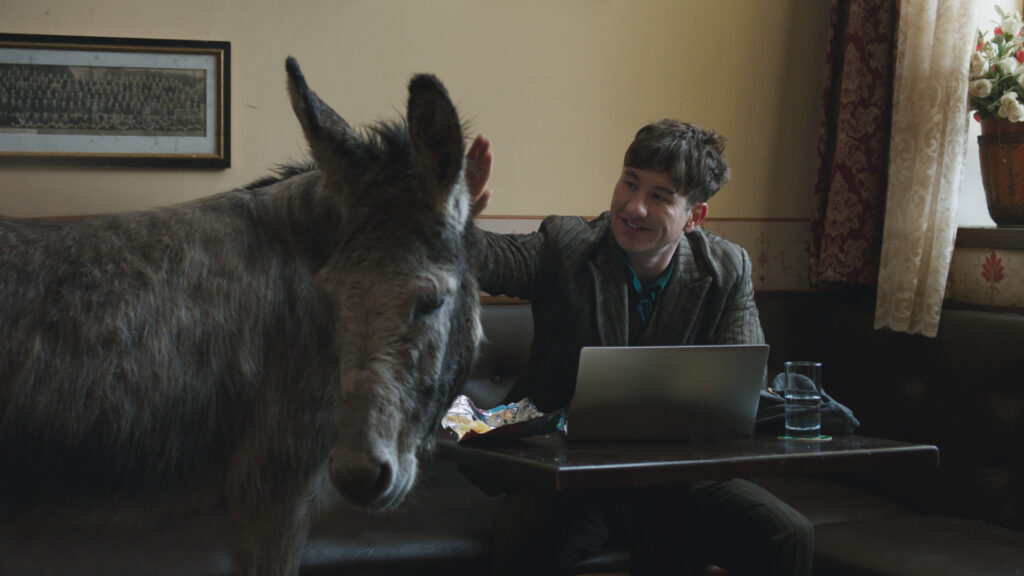
Everything great we’ve ever made can be traced back to a partnership between a director and production company. Even as the industry keeps changing, one thing has stayed remarkably consistent: once an idea is greenlit, the process still begins with the same fundamental question—who is the right director for this, and do they truly share the vision?
More than that, we’re looking for someone who adds something to the idea. Someone who sees what’s there—and what it could become.
Over the years, we’ve built deep relationships with incredible production companies, but we’re just as excited to discover new ones. There’s a generation of emerging directors right now with a fresh lens, and we’re constantly watching the work. As always, we’re looking for a body of work that lives in the right creative postal code of what we’re imagining.
The creative call with a director is often the most revealing part of the process. That’s where you feel the chemistry—how they think, how they talk about the story, how they build on the idea. We still love a beautifully written, thoughtfully crafted treatment, but sometimes a real conversation tells you far more than a deck ever could.
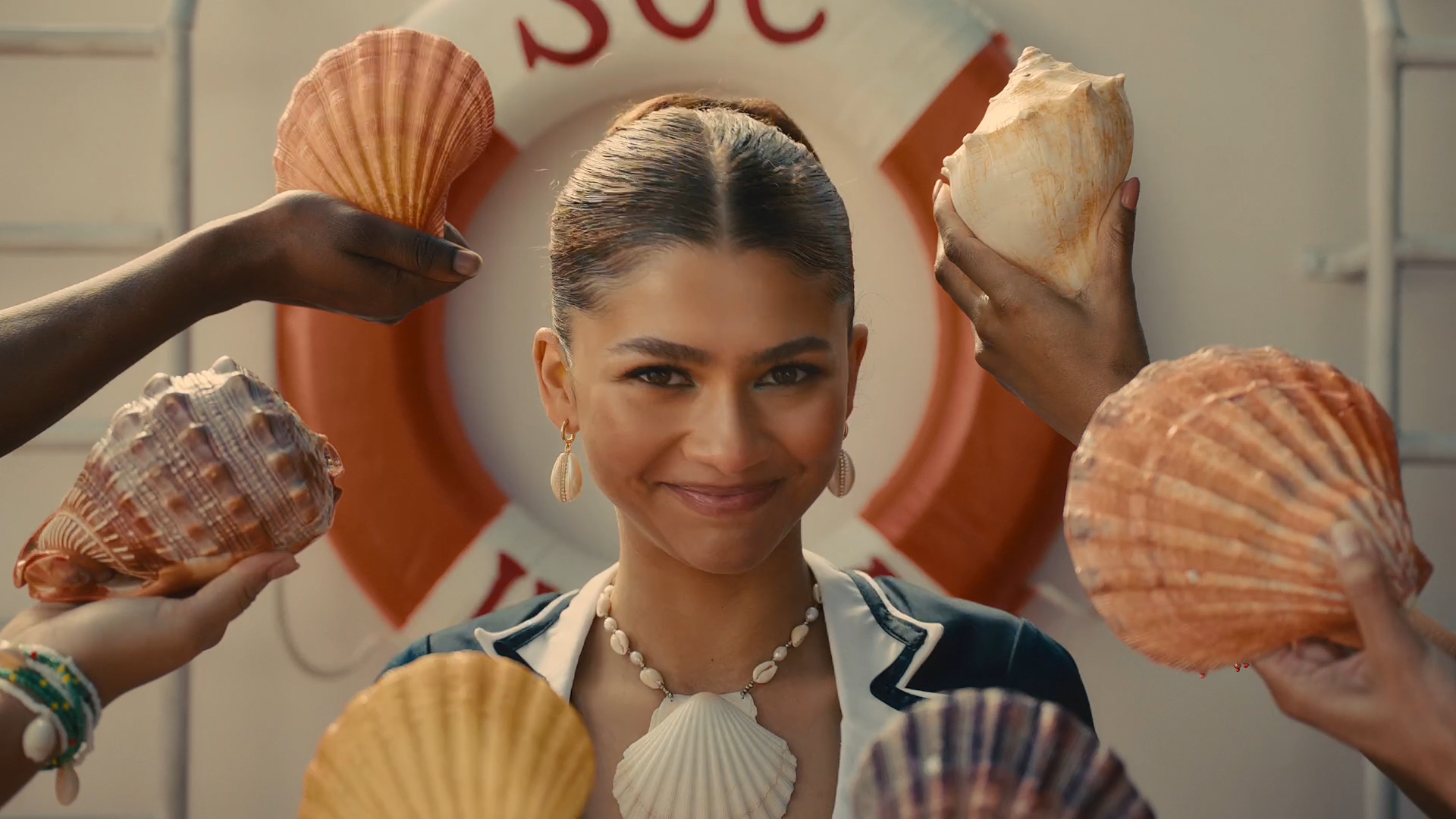
When you bring celebrity talent into the mix, the puzzle gets more complex—and more interesting. Talent often have directors they already trust and want to work with. It doesn’t always align perfectly, but more often than not, we end up agreeing. Because if you’re trying to draw a real performance out of someone, the comfort and shorthand that comes from an existing director–talent relationship is invaluable.
At what point do you bring directors into the picture – is the script locked, or do they come in with room to help develop the idea?
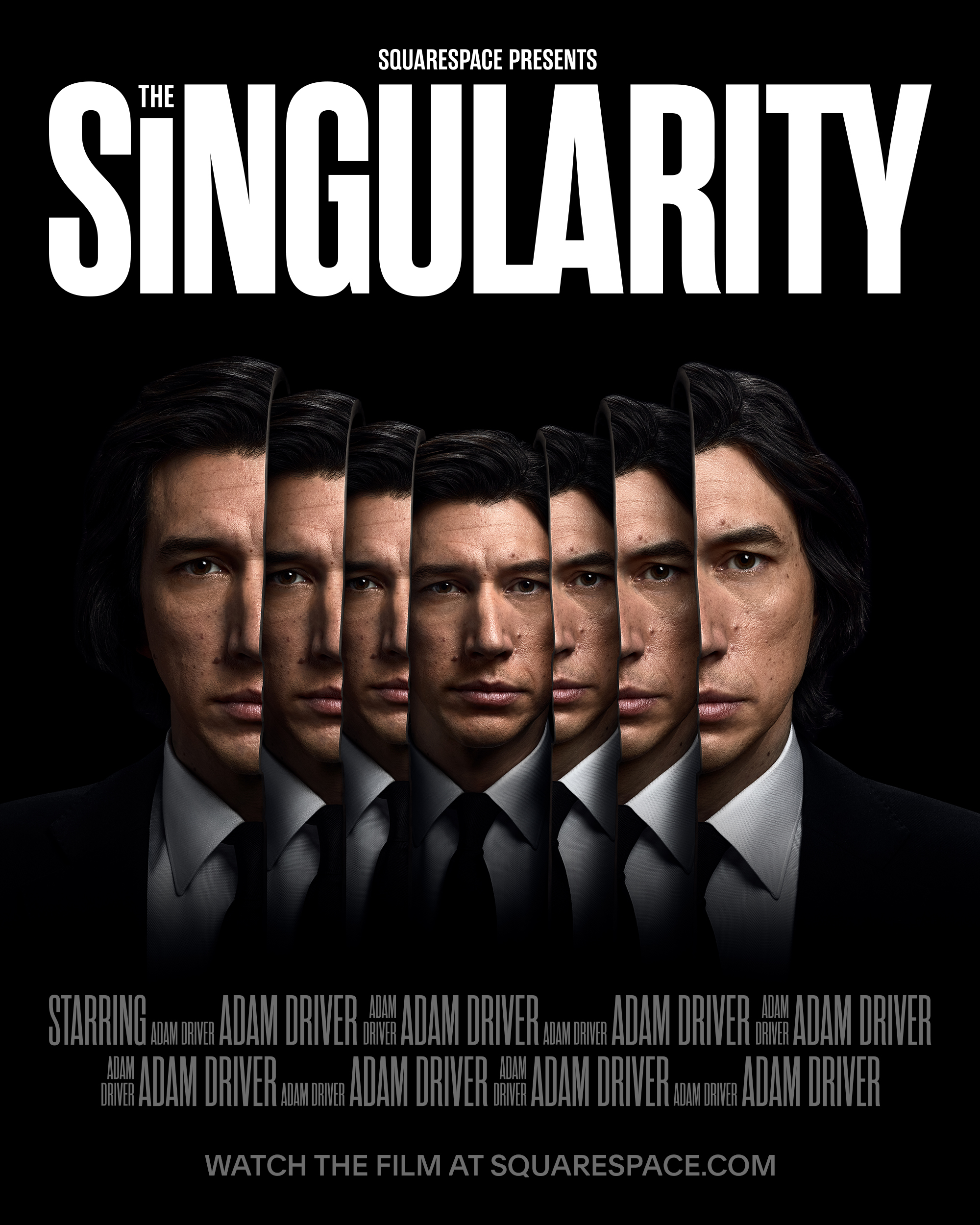
It depends. Sometimes a script goes out to a director and comes back untouched—there’s a shared recognition that what’s on the page is already great. Other times, a director returns with ideas, edits, or new angles they believe will make it stronger. Either way, our only priority is the best possible outcome. We don’t get territorial or let ego get in the way.
There are also moments when we bring a director in much earlier. Sometimes we have the scaffolding of an idea but haven’t fully cracked it yet. In those cases, we’ll invite a director into the writers’ room to shape the script together. That kind of collaboration creates real ownership—everyone feels invested in where it lands.
We have enough self-awareness to know we’re not the only ones with good ideas. The right director can take something strong and make it even better—and that’s exactly what we want.
Squarespace ads feature an impressive list of A-list acting talent, a move into branded entertainment seems likely? What opportunities or challenges are offered by the long-form branded content space?
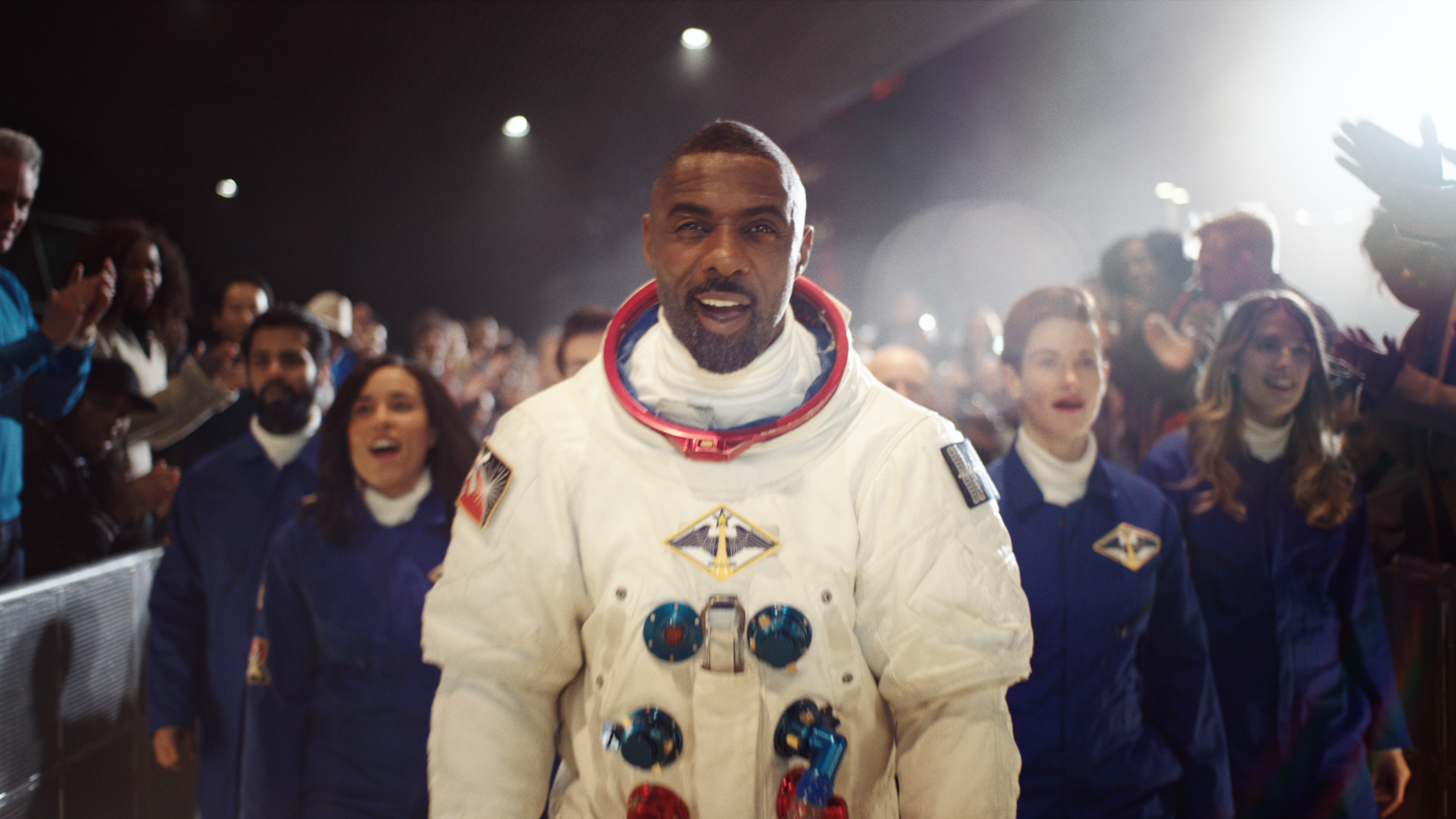
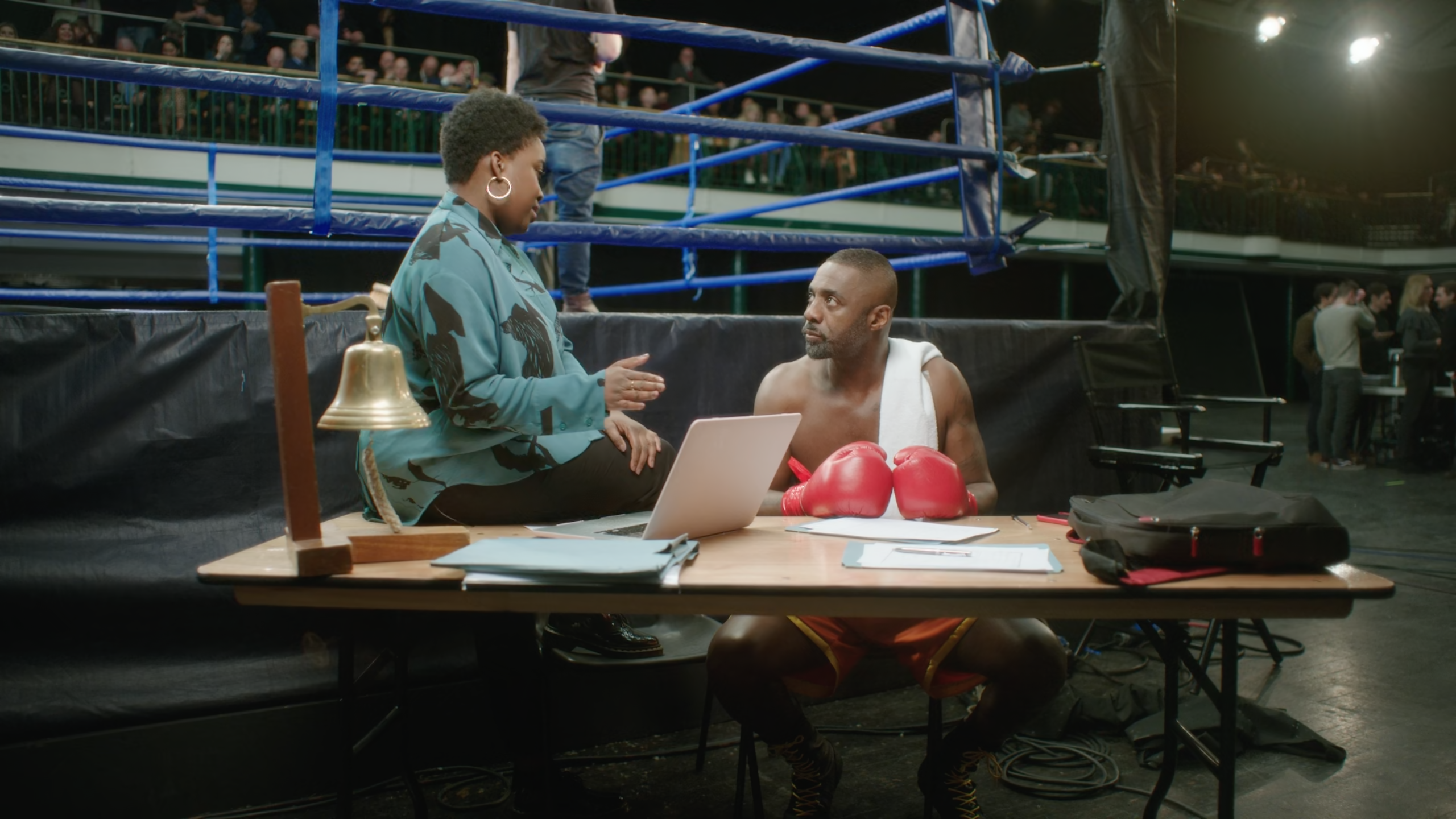
I think about everything we do as branded entertainment. The way I describe our creative DNA is this: we’re part Silicon Valley, because we’re a tech company. We’re part Madison Avenue, because we are the agency and we call New York home. And we’re part Hollywood, because we want our work to be indistinguishable from cinema. Everything we’ve done that truly matters lives in the overlap of that Venn diagram.
The line between advertising and branded entertainment gets blurrier every year. Some of our Super Bowl work with A-list talent could easily be considered branded content. We’ve made short films that go far beyond 30 seconds—so where does “long form” actually begin? In the end, it’s less about runtime and more about the level of commitment you’re asking from the audience.
On another front, we use social as a place to experiment and pilot new franchise ideas. One example is Renewwwal, an unscripted social series where we travel around New York City finding businesses that need an online refresh—think home makeover, but for your digital brand. What started as a small pilot quickly became our most engaged and beloved content series, and it’s now set to continue into 2026.
Could it become something bigger? Maybe an unscripted series in its own right. That’s the exciting part—when you create the right conditions, ideas have a way of telling you what they want to become.
How can brands continue to champion human-honed craft alongside AI’s presence?
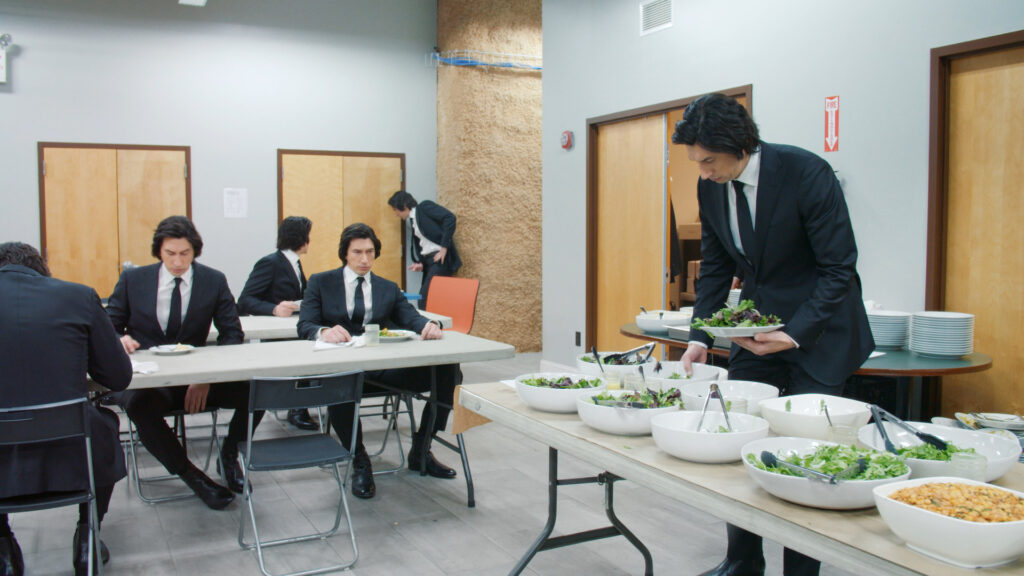
I believe creativity is the only job left. And rather than seeing that as some dystopian sci-fi ending, I see it as the beginning of a new golden age for humanity.
AI will become extraordinarily good at left-brain, logic-driven work. If your job is built around repetition—data entry, basic research, mechanical tasks—that should give you pause. But those were never the jobs most people dreamed of doing anyway. Our real value as humans has always been our creative thinking, our emotional intelligence, and even our beautifully imperfect ability to make mistakes.
As Co-Chair of the Rhode Island School of Design, I see where this is headed. We’re moving toward a world where creativity, critical thinking, critique, and craft form the foundation of education and work. Great taste will be the currency of the future. Knowing what should exist—and what shouldn’t—is something deeply human.
I truly believe human craft will become the new luxury, while AI becomes the tool for the masses. People don’t invest in art simply because of how it looks—they invest in the story of the human who made it. Luxury has always placed a premium on the hand-made: the artisan’s stitch, the subtle imperfection, the sense of something that is truly one of one. We’re already seeing it—film over digital, vinyl over streaming, vintage cars over Teslas, wired headphones over wireless. These aren’t regressions; they’re signals.
Humans will always be the arbiters of taste. We decide what matters next. Just look at Gen Z—nostalgic for eras they never lived through. Culture moves in cycles. What’s old becomes new again. And in a world flooded with infinite, automated content and AI slop, the things that feel human will only become more valuable.
From a client perspective, what key skills will serve young creative and directing talent well in the industry today?
I have a lot of empathy for the younger generation. There’s an understandable unease in the air when all you hear is that companies aren’t hiring juniors, that entry-level roles are disappearing, that AI is changing everything. And it’s true—these tools tend to favor people who have lived fuller lives, who have deep reference libraries, and who carry years of experience. I meet a lot of young people right now who feel that weight. I see it on their faces.
But here’s the part that often gets missed.
Young people are the ones who shape culture. You create the next trends, the next movements, the next shifts that set the tone for years to come. We need you to tell us what’s coming next. In creative ideas and directing especially, who is better positioned to sense where film, music, fashion, and storytelling are headed? Will there be a return to sitting around the campfire when everyone is tired of remote life and living through screens? Will disconnecting from social media become the new flex? Will the communal viewing experience of watching films at the cinema come back? Will live, physical experiences become the most powerful way brands reach people again?
Our job, as those who’ve been here longer, is to describe where we were and where we are. Your job is to show us where we need to go.
As a young creative, that means bringing ideas, references, and instincts that we haven’t seen yet. As a young director, it means telling stories that speak to your generation in ways no one else can. It’s your job to remix what exists into new recipes the rest of us haven’t tasted before.
So keep your head up. Stay curious. Look forward with optimism. I genuinely believe the best things are still ahead.